Explore Non-Invasive Pelvic Floor Muscle Stimulation at BG Medical Aesthetics
Looking for BTL Emsella in Los Angeles or San Gabriel, California? Emsella is a non-invasive, chair-based device that uses electromagnetic energy to stimulate pelvic floor muscle contractions. It has FDA clearance for pelvic floor muscle rehabilitation and neuromuscular control in male and female urinary incontinence.
At BG Medical Aesthetics in San Gabriel, serving Greater Los Angeles, patients can arrange a consultation to discuss their bladder-control symptoms, understand the treatment, and review its possible benefits, limitations, safety considerations, and alternatives.
Not every type of urinary incontinence is caused by weak pelvic floor muscles, and Emsella is not a guaranteed cure. Current medical guidelines also raise important questions about the effectiveness of electromagnetic stimulation for stress urinary incontinence.
Discuss Your Pelvic Floor Health
Contact BG Medical Aesthetics or call 626-282-8822 to discuss consultation availability.
What Is BTL Emsella?
BTL Emsella is a non-invasive electromagnetic pelvic floor stimulation treatment performed while a patient sits on a specialized chair.
The device produces an electromagnetic field that stimulates contractions of the pelvic floor muscles without requiring surgical incisions or internal treatment probes.
The pelvic floor is a group of muscles and connective tissues that supports pelvic organs and contributes to urinary control.
Emsella’s FDA-cleared indication relates to rehabilitation of weak pelvic muscles and neuromuscular control for male and female urinary incontinence.
However, FDA clearance should not be interpreted as a guarantee of improvement for every patient or proof that Emsella is superior to established treatments.
How Does the Emsella Chair Work?
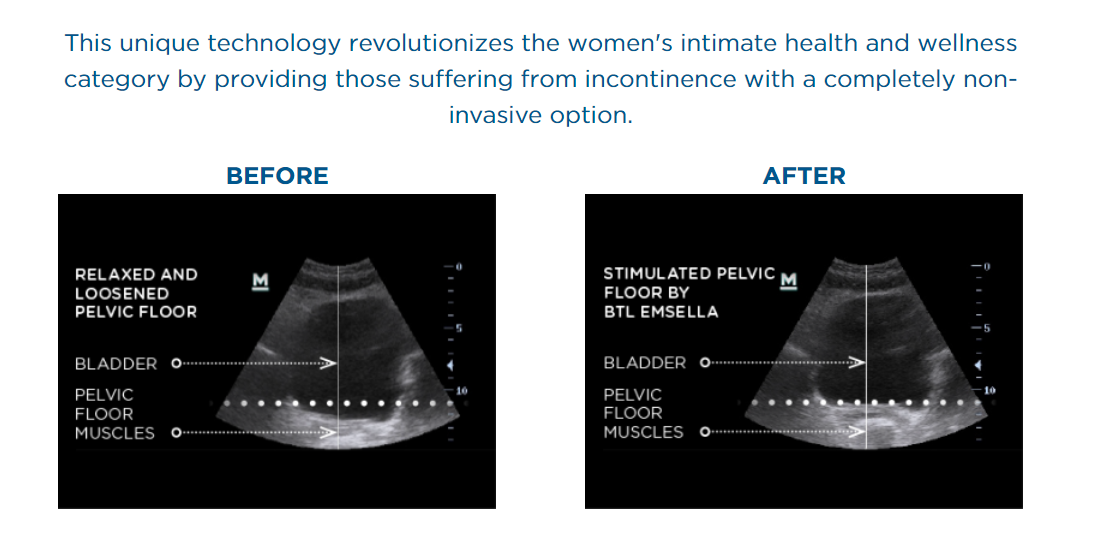
Emsella uses high-intensity focused electromagnetic (HIFEM) technology to stimulate repeated contractions in the pelvic floor muscles.
During treatment, the patient sits on the chair while the device delivers electromagnetic stimulation through the seat.
The contractions are generated by the device rather than through consciously performed pelvic floor exercises.
The goal of this technology is to stimulate the muscles involved in pelvic support and urinary control.
However, urinary leakage can have several underlying causes, and stronger muscle contractions do not necessarily resolve every condition.
A qualified clinician should assess whether a muscle-stimulation approach is appropriate.
Understanding Urinary Incontinence
Urinary incontinence means losing urine unintentionally.
Different types of incontinence can produce similar symptoms but require different treatment approaches.
Stress Urinary Incontinence
Stress urinary incontinence involves leakage when pressure increases inside the abdomen, such as during:
- Coughing
- Sneezing
- Laughing
- Running
- Jumping
- Lifting heavy objects
Pelvic floor weakness may contribute to these symptoms, although other factors can also be involved.
Important: The European Association of Urology currently recommends against electromagnetic stimulation for female stress urinary incontinence outside a closely monitored research setting, based on the available evidence. Patients should discuss this limitation and established treatment alternatives with their clinician.
Urge Urinary Incontinence
Urge incontinence involves a sudden need to urinate that may be followed by involuntary leakage.
It may occur with overactive bladder symptoms, which can also include frequent urination or waking at night to urinate.
Urge incontinence is not necessarily caused by weak pelvic floor muscles.
Bladder training, behavioral approaches, medication, and other treatments may be appropriate depending on the diagnosis.
Mixed Urinary Incontinence
Mixed urinary incontinence includes symptoms of both stress and urge incontinence.
Management may require addressing more than one contributing factor.
A proper evaluation is important before deciding whether pelvic floor stimulation should be considered.
Potential Features of BTL Emsella Treatment
Patients exploring Emsella may be interested in these treatment characteristics:
- Non-invasive chair-based procedure
- No surgical incisions
- No routine use of an internal treatment probe
- Patients can usually remain fully clothed
- Approximately 28–30 minutes per session
- Device-generated pelvic floor muscle contractions
- Generally limited interruption to normal daily activities
- Treatment planning based on individual clinical assessment
These features describe the treatment experience, not guaranteed improvements in bladder symptoms.
Who May Be Considered for Emsella?
Emsella may be discussed with certain adults experiencing urinary incontinence or concerns involving pelvic floor muscle weakness.
The suitability of treatment depends on the individual’s diagnosis, medical history, implanted devices, and other clinical factors.
Emsella for Women
Women may experience bladder leakage in association with childbirth, aging, menopause, pelvic floor dysfunction, or other conditions.
However, these symptoms do not all have the same cause.
For women with stress or mixed urinary incontinence, supervised pelvic floor muscle training is an established conservative treatment that should be discussed before choosing a device-based approach.
Emsella for Men
Men can also experience urinary incontinence, including after certain prostate procedures or because of other urinary or neurological conditions.
A medical evaluation should identify the cause before treatment.
Emsella’s FDA-cleared indication includes male urinary incontinence, but that clearance does not establish that it is the preferred treatment for every male patient.
Patients experiencing urinary leakage after prostate surgery should consult their treating urologist about appropriate rehabilitation and management options.
Pelvic Floor Symptoms After Childbirth
Pregnancy and childbirth can affect pelvic floor function, but postpartum symptoms may involve several different issues.
A postpartum patient should receive an appropriate medical assessment before undergoing elective pelvic floor stimulation.
Treatment should not be performed during pregnancy.
What Happens During an Emsella Session?
Step 1: Consultation and Medical Screening
Before treatment, your provider reviews your urinary symptoms, medical history, medications, previous procedures, and implanted devices.
Depending on your symptoms, evaluation by a primary care clinician, urologist, urogynecologist, or pelvic floor specialist may be recommended.
Step 2: Treatment Preparation
If the procedure is appropriate, the provider explains how to sit on the Emsella chair and what sensations to expect.
Patients typically remain clothed during the session.
The provider checks for safety concerns and follows the relevant device instructions.
Step 3: Pelvic Floor Muscle Stimulation
The device delivers electromagnetic energy that produces repeated pelvic floor contractions.
Patients may experience tingling, vibrations, or involuntary muscle contractions.
The sensation can be unusual and may cause discomfort for some people. Tell your provider if you experience significant pain or another unexpected symptom.
Step 4: Aftercare and Follow-Up
Many patients can return to normal daily activities shortly after a session.
Temporary muscle soreness, spasms, or other reactions may occur.
Your provider can explain what to monitor and whether follow-up evaluation or further treatment is appropriate.
How Long Is an Emsella Session?
A typical Emsella treatment lasts approximately 28–30 minutes.
BG Medical Aesthetics’ existing treatment information describes a commonly used plan of six sessions, scheduled twice weekly.
However, the number of appointments should not be assumed to be appropriate for every patient.
Any treatment series should follow proper clinical assessment, medical guidance, and informed consent.
Does Emsella Work for Urinary Incontinence?
Research on electromagnetic pelvic floor stimulation has produced mixed findings.
Some studies report improvements in symptoms or quality-of-life measures. However, studies differ in their designs, patient groups, treatment protocols, and follow-up periods.
Importantly, the European Association of Urology advises against electromagnetic stimulation for female stress urinary incontinence outside a well-regulated and closely monitored research study.
This recommendation should be considered alongside the device’s FDA clearance and other available research.
Patients should ask about the evidence for their specific condition, realistic expectations, and the benefits and risks of alternative treatments.
No improvement should be guaranteed.
When Might Results Become Noticeable?
There is no reliable timeline that applies to every patient.
Studies and promotional materials sometimes report changes during or after a treatment series, but individual outcomes differ and meaningful improvement is not assured.
The response may depend on the type of incontinence, severity of symptoms, associated medical conditions, and other treatments being used.
Symptom records, including bladder diaries, can help patients and clinicians assess change over time.
How Long Do Emsella Results Last?
Long-term outcomes remain uncertain for different patient populations.
Some providers discuss maintenance sessions, but maintenance should not be presented as automatically necessary or effective for everyone.
Before paying for a treatment package, ask what evidence supports the recommended schedule and what follow-up care will be provided.
Is Emsella Painful?
During the procedure, patients usually notice tingling, vibration, or repeated contractions in the pelvic floor area.
Some people tolerate the sensation comfortably, while others may experience soreness or discomfort.
The treatment should not be advertised as guaranteed painless.
Tell your provider immediately about significant pain or unexpected symptoms during the procedure.
Is There Downtime After Emsella?
Emsella is non-invasive, and many patients resume usual activities soon after treatment.
However, possible temporary effects include muscular pain, muscle spasms, joint or tendon discomfort, local redness, or other symptoms.
Your provider should give you instructions based on your medical history and treatment response.
Emsella Side Effects, Risks and Contraindications
Electromagnetic pelvic floor stimulation is not suitable for everyone.
The FDA’s 510(k) summary for the BTL device describes potential side effects including muscular pain, temporary muscle spasm, temporary joint or tendon pain, increased local circulation, increased sensitivity during intercourse, and local redness.
Before treatment, tell your provider if you:
- Have a pacemaker or another implanted electronic device
- Have metal implants or medical devices in or near the treatment area
- Have an intrauterine device (IUD)
- Are pregnant or may be pregnant
- Have recently undergone pelvic or abdominal surgery
- Have significant unexplained pelvic pain
- Have active urinary or pelvic symptoms that have not been evaluated
- Have other medical conditions affecting pelvic or bladder function
These are screening considerations, not an exhaustive list of contraindications. The clinic must follow the exact device labeling and appropriate medical guidance.
Patients with fever, painful urination, blood in the urine, difficulty emptying the bladder, or new neurological symptoms should seek appropriate medical evaluation rather than relying on a cosmetic clinic treatment.
Emsella vs. Kegel Exercises and Pelvic Floor Physical Therapy
Kegel exercises involve voluntarily contracting and relaxing pelvic floor muscles.
Supervised pelvic floor physical therapy goes further by assessing muscle strength, coordination, relaxation, breathing, and other contributing factors.
Emsella produces device-generated contractions without requiring the patient to perform them consciously.
These approaches are not interchangeable.
Supervised pelvic floor muscle training is an established first-line conservative approach for many patients with stress or mixed urinary incontinence.
Emsella should not be presented as a proven replacement for pelvic floor physical therapy.
Emsella vs. Other Urinary Incontinence Treatments
Treatment for urinary incontinence depends on its underlying cause.
Possible approaches include:
Pelvic Floor Physical Therapy: Helps patients learn appropriate pelvic floor strengthening, relaxation, and coordination techniques.
Bladder Training: Uses planned voiding and behavioral strategies to help manage certain urgency and overactive bladder symptoms.
Medication: May be appropriate for some patients with overactive bladder or other diagnosed urinary conditions.
Specialist Procedures: Certain patients may be considered for other treatments after urological or urogynecological assessment.
The best choice requires individualized assessment and consideration of the available clinical evidence.
How Much Does Emsella Cost in Los Angeles?
Emsella prices vary between providers and may depend on the clinic, number of appointments, treatment package, and consultation arrangements.
BG Medical Aesthetics has not provided a verified current Emsella price in the information available for this page.
Patients should ask the clinic about:
- Cost per session
- Total cost of any proposed treatment series
- Consultation or assessment fees
- Follow-up appointments
- Refund and cancellation terms
- Whether the proposed treatment is clinically suitable for their diagnosis
Contact BG Medical Aesthetics for its current pricing and service information.
Why Contact BG Medical Aesthetics in San Gabriel?
BG Medical Aesthetics is located in San Gabriel, California, and serves people from Los Angeles and nearby San Gabriel Valley communities.
Patients researching Emsella can contact the practice to ask about treatment availability, the consultation process, safety screening, and whether referral for a specialist urinary evaluation is appropriate.
For a broader overview, visit the Incontinence Relief Services page.
The goal of an informed consultation should be to understand the patient’s symptoms, review available evidence, and identify appropriate next steps.
Frequently Asked Questions About BTL Emsella
What is BTL Emsella?
BTL Emsella is a non-invasive chair-based device that uses electromagnetic stimulation to produce pelvic floor muscle contractions. Its FDA-cleared indication includes pelvic muscle rehabilitation for male and female urinary incontinence.
Is Emsella FDA approved?
The relevant BTL device received FDA 510(k) clearance for a defined urinary incontinence indication. FDA clearance is different from a guarantee of clinical success.
Does Emsella cure urinary incontinence?
A cure cannot be guaranteed. Effectiveness varies, and current clinical guidance raises significant concerns about the evidence for electromagnetic stimulation in female stress urinary incontinence.
Is Emsella suitable for stress urinary incontinence?
Professional guidance should be considered carefully. The European Association of Urology recommends against electromagnetic stimulation for female stress urinary incontinence outside a closely monitored research study.
Can men use Emsella?
The device’s FDA-cleared indication includes male urinary incontinence. However, individual suitability depends on medical assessment, and men with leakage should discuss evidence-based treatment with a qualified clinician.
Does Emsella replace Kegel exercises?
No. Device-generated pelvic muscle contractions do not automatically replace supervised pelvic floor muscle training or other established approaches.
How many Emsella sessions are usually offered?
BG Medical Aesthetics’ existing page describes six sessions, commonly scheduled twice weekly. The clinical suitability of any treatment series must be evaluated individually.
How long does each session last?
A typical appointment involves approximately 28–30 minutes of treatment.
Can I remain fully clothed?
Patients generally remain fully clothed while seated on the Emsella chair, subject to the provider’s positioning and safety instructions.
Does Emsella hurt?
Some patients tolerate the muscle contractions comfortably, but tingling, soreness, muscle spasms, or discomfort may occur.
Is there any downtime?
Many people return to routine activities after treatment. Temporary discomfort and other side effects are possible.
Can I receive Emsella if I have a pacemaker or metal implant?
Certain implanted devices or metal materials may make treatment unsuitable. Always disclose implants and medical devices before treatment.
Can Emsella be used during pregnancy?
Elective Emsella treatment should not be performed during pregnancy. Discuss postpartum symptoms and treatment timing with your clinician.
Where is BG Medical Aesthetics located?
BG Medical Aesthetics is located at 225 W. Valley Blvd, Suite H288, San Gabriel, CA 91776, serving patients from Los Angeles, Pasadena, Alhambra, Arcadia, Monterey Park, Rosemead, and surrounding communities.
Discuss Your Pelvic Floor Treatment Options
If you are researching BTL Emsella, contact BG Medical Aesthetics to ask about treatment availability, consultation arrangements, safety screening, and appropriate clinical evaluation.
BG Medical Aesthetics
225 W. Valley Blvd, Suite H288
San Gabriel, CA 91776
Call: 626-282-8822
Text: 626-602-1462